Florida wind mitigation: insurance savings and hurricane season readiness
Hurricane season arrives each June in Florida, and with it comes a rush to review insurance, confirm coverage, and button up your home. One of the simplest ways to stay ready is a wind mitigation inspection. It documents the wind-resistant features your home already has so your insurer can apply any eligible credits. It can also highlight practical upgrades that improve protection before storms strengthen off the coast.
If you live in Jacksonville, the Beaches, St. Augustine, Clay County, or nearby communities, this guide explains what wind mitigation is, how credits work, what inspectors document, and how to prepare your home for the months ahead. You will also learn how wind mitigation differs from a 4-point or full home inspection so you can choose the right service for your needs.
What wind mitigation is and why it matters in Florida
A wind mitigation inspection is a targeted, insurance-focused review that documents features proven to reduce wind damage. Insurers in Florida often offer premium credits when these features are properly verified with photos and forms. The inspection does not grade the whole home. It zeroes in on the parts of the structure that most affect wind resistance.
In Northeast Florida, wind-driven rain and gusts push on your roof and openings first. A proper inspection captures whether the roof and its connections can resist uplift, whether the deck is nailed to modern standards, whether you have a backup water barrier, and whether windows and doors are protected. When these items are in place, insurers typically see lower risk, which can translate to policy credits.
What a wind mitigation inspection documents
Expect your report to focus on the following building elements that influence storm performance and insurance credits:
- Roof shape. Hip roofs generally perform better in wind than gable roofs. The inspector will document your roof geometry.
- Roof-to-wall connections. Clips, straps, or wraps that tie rafters or trusses to walls reduce uplift. The report will note type and fastener count.
- Roof deck nailing. Nail size and spacing matter. Properly spaced ring-shank nails can significantly improve resistance.
- Roof covering. Shingle type, installation, and age are documented along with any secondary water resistance beneath the covering.
- Secondary water resistance. A self-adhered underlayment or similar barrier can slow water intrusion if the covering is compromised.
- Opening protection. Impact-rated windows, approved shutters, reinforced doors, and protected garage doors are verified and photographed.
A thorough report includes clear photos, simple explanations, and insurer-ready forms. At BVA Home Inspections, we provide photo-rich, mobile-friendly documentation and, on request, email it directly to your insurance agent so your renewal or review does not get delayed. Learn more about our certified wind mitigation services in Jacksonville and surrounding counties on our wind mitigation page.
How to qualify for insurance credits
You do not have to guess which upgrades matter. Credits are tied to the documented features above. Here is a practical path:
- Schedule a wind mitigation inspection. Your inspector will verify current features and identify gaps that, if addressed, may improve your credit profile.
- Prioritize roof and openings. Upgrading roof-to-wall connections, improving deck nailing during a reroof, adding secondary water resistance, and installing impact-rated openings are common ways to increase credit eligibility. Many homeowners time these improvements with a planned reroof to control cost.
- Provide clean documentation. Insurers often require a recent inspection with photos. BVA delivers detailed documentation and can send it directly to your carrier for review.
Every policy and carrier is different, and premium changes can vary. The right move is to document what you have today, discuss potential credits with your agent, and consider targeted upgrades when you are already doing roof or window work. If you want insurer-ready documentation quickly, schedule a wind mitigation inspection Jacksonville FL on our site.
Hurricane season checklist for Northeast Florida homes
Use this localized checklist for Jacksonville, the Beaches, St. Augustine, Orange Park, and Clay County. Start in early June, then recheck before any forecasted storm.
- Clear the roof and gutters. Remove leaves, palm fronds, and pine straw. Confirm downspouts move water away from the foundation.
- Test and stage shutters or panels. Verify hardware is complete, labeled, and accessible. Pre-fit panels for upper-story openings.
- Confirm opening protection. Check impact-rated windows and doors for intact seals and proper latching. Inspect garage door bracing.
- Review attic ventilation. Ensure soffit and ridge vents are clear. Good airflow reduces heat and pressure that stress roof systems.
- Secure outdoor items. Tie down grills, furniture, and play equipment. Trim limbs that overhang the roof or power lines.
- Check secondary defenses. Verify weatherstripping at exterior doors, caulk around penetrations, and seal small roof or wall gaps that admit driven rain.
- Document the roof. Capture current-condition photos. If access is difficult, drone imagery during an inspection can help establish a baseline for any future claim.
If you prefer a professional eye on these items, ask us to include seasonal storm-readiness notes with your inspection. Our photo documentation and clear next steps support quick action before conditions deteriorate.
Wind mitigation vs. 4-point vs. full inspection
These services serve different needs. Choosing the right one saves time and keeps your insurance or transaction moving.
- Wind mitigation. Targeted insurance documentation of wind-resistant features. Best for potential credits and renewal support. Often completed in under an hour and valid for several years unless the roof or openings change.
- 4-point. A carrier-focused snapshot of the roof, electrical, plumbing, and HVAC. This is not a full inspection. It verifies that major systems are present and in acceptable condition for underwriting. If your insurer asks for a 4-point in Jacksonville or Clay County, see our 4-point inspection Jacksonville FL page for details and quick scheduling.
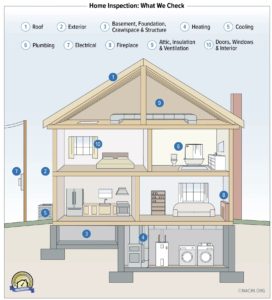
- Full home inspection. A comprehensive evaluation from foundation to roof, ideal for buyers, sellers, and homeowners who want a complete picture. It includes structural components, interiors, electrical, plumbing, HVAC, attic, insulation, and more, plus a prioritized summary. If you need a whole-home view or are preparing to list, start with a home inspection Jacksonville FL and add insurance documents as needed.
A simple way to decide: if your agent requests specific insurance forms, you likely need wind mitigation or a 4-point. If you are buying, selling, or planning maintenance, a full inspection offers broader insight and can include insurance add-ons.
What to expect from BVA Home Inspections
BVA Home Inspections serves Jacksonville, the Beaches, St. Augustine, Clay, and surrounding counties with licensed, InterNACHI-trained inspectors. You get:
- Prompt scheduling, including short notice during hurricane season.
- Photo-rich, mobile-friendly reports that are clear and easy to use.
- Direct emailing to insurers or agents on request, so credits and renewals stay on track.
- Drone roof imagery when appropriate to capture hard-to-see areas safely.
Explore how our detailed home inspection reports help you make informed property decisions and keep your timeline moving.
Quick FAQ
- What is wind mitigation and why does it matter in Florida? It is an inspection that documents wind-resistant features like roof shape, roof-to-wall connections, roof deck nailing, secondary water resistance, and opening protection. Proper documentation can help qualify you for insurance credits and support renewals.
- How can I qualify for insurance credits? Schedule a wind mitigation inspection to verify what you already have. Discuss potential credits with your agent, then consider targeted upgrades such as improved roof connections, deck nailing during a reroof, secondary water resistance, and impact-rated openings. Provide your insurer with a recent, photo-supported report.
- What should I expect during hurricane season prep? Clear roof and gutters, stage shutters or panels, verify impact protection, check attic ventilation, secure outdoor items, and seal weather entry points. Document your roof condition with photos or an inspection, and recheck before any approaching storm.
Summary and next step
Wind mitigation is a Florida essential. It helps you understand how your roof, connections, and openings will stand up to wind, and it can unlock insurance credits when properly documented. Pair that with a simple hurricane checklist, and you will enter the season with greater confidence.
If you need insurer-ready documentation in Jacksonville, the Beaches, St. Augustine, or Clay County, schedule a wind mitigation or 4-point with BVA Home Inspections. We offer quick appointments, clear reports, and direct delivery to your insurer so renewals and credits can move forward without stress. You are buying peace of mind, not just a report.
- Learn more or book a wind mitigation inspection Jacksonville FL: https://www.bvahomeinspections.com/wind-mit-inspections
- If your carrier requested a 4-point inspection Jacksonville FL: https://www.bvahomeinspections.com/4-point-insurance-inspections
- For a comprehensive home inspection Jacksonville FL: https://www.bvahomeinspections.com
- See how our detailed home inspection reports support informed property decisions: https://www.bvahomeinspections.com/your-inspection